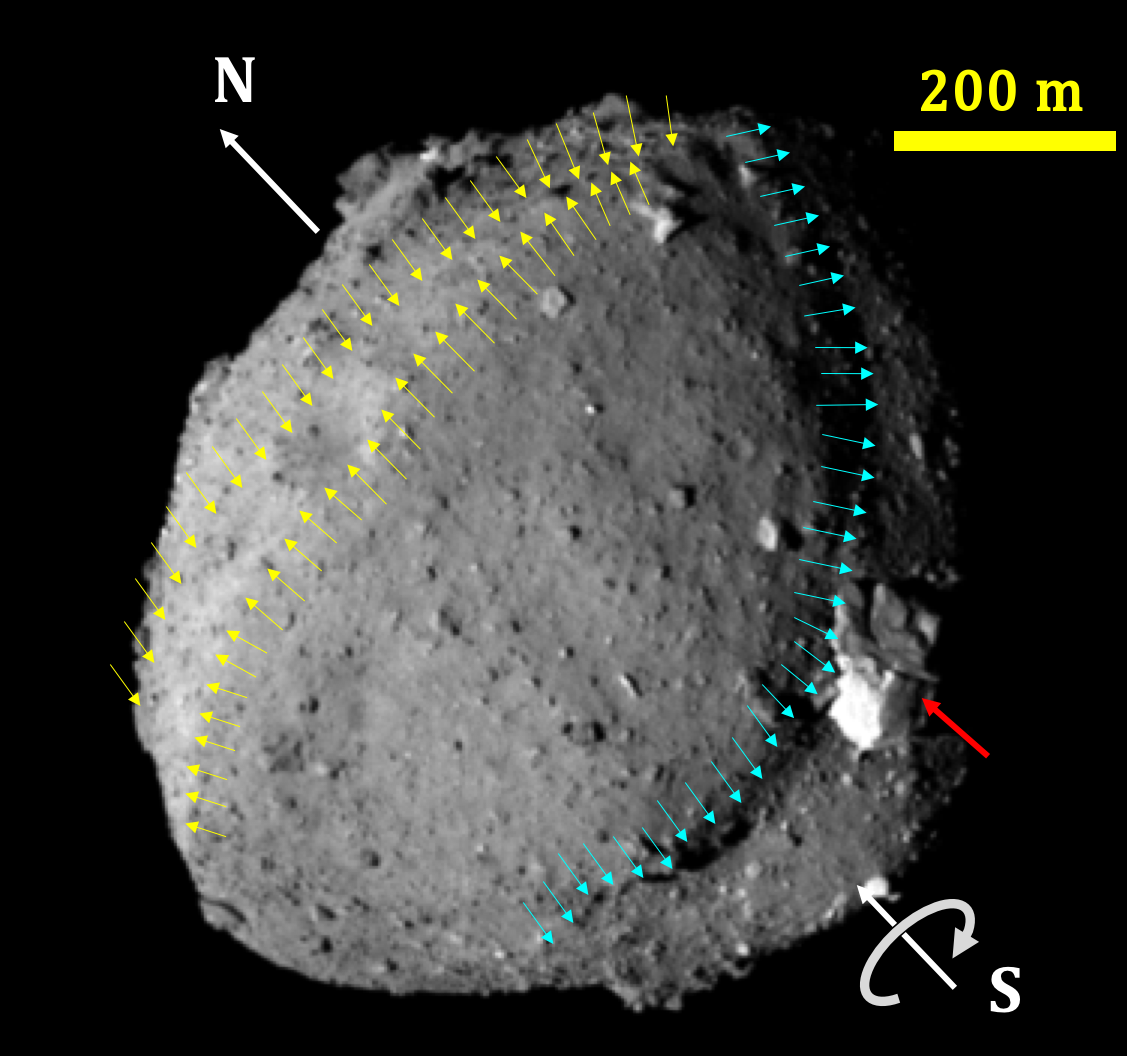
 Ryugu is a C-type asteroid – rich in carbon – about 900m wide. © 2019 Seiji Sugita et al., Science
Press release on paper published in Science led by Professor Sugita.
[Press release] Hayabusa2 probes asteroid for secrets

Ryugu is a C-type asteroid – rich in carbon – about 900m wide. © 2019 Seiji Sugita et al., Science
Press release on paper published in Science led by Professor Sugita.
[Press release] Hayabusa2 probes asteroid for secrets
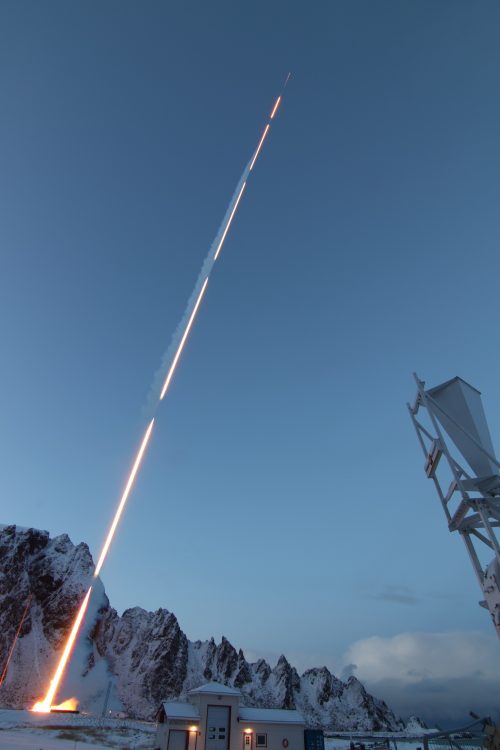
The RockSat-XN was launched on January 13th, 2019 from Andøya Space Center in Norway.
The scientific payloads for Japanese PARM (Pulsating AuroRa and Microbursts) project are installed on the RockSat-XN.
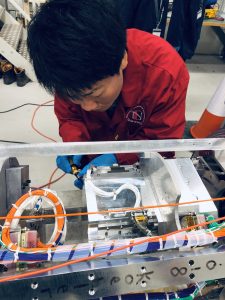
The group led by Satoshi Kasahara (School of Science) participated in this project. Students’ “hand-made” analyser was installed on the Rocket to measure the electron precipitation from space.
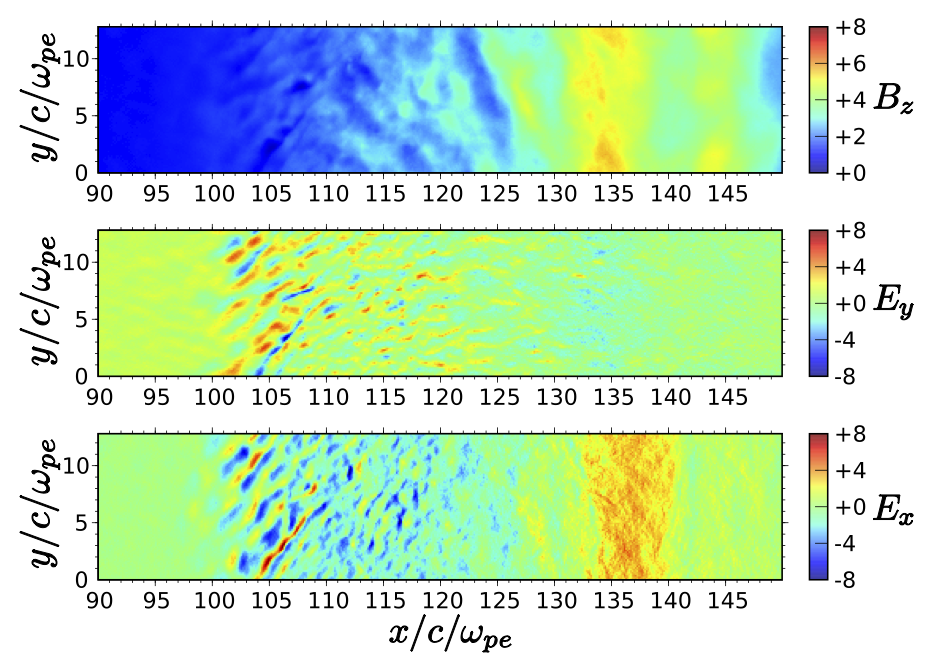
Associate Professor Takanobu Amano receives the AAPP-DPP Young Researcher Award from the Division of Plasma Physics, Association of Asia Pacific Physical Societies for his significant contributions to the simulation and theory of acceleration of non-thermal electrons in collisionless shocks in space and astrophysical plasmas.
Association of Asia Pacific Physical Societies, Division of Plasma Physics (AAPPS-DPP)
Young Researcher Award Winners
The paper by Satoshi Kasahara was selected as a 2018 Editor’s choice of Nature.
(Image Credit: JAXA)
BepiColombo was launched on October 20th(JST)!
BepiColombo is JAXA (Japan Aerospace Exploration Agency) and ESA (European Space Agency) cooperative Mercury exploration mission. Simultaneous Launch of MMO (Mercury Magnetospheric Orbiter) and MPO (Mercury Planetary Orbiter) was conducted.
Ichiro Yoshikawa and Kazuo Yoshioka (Graduate School of Frontier Sciences) developed Mercury Sodium Atmospheric Spectral Imager “MSASI” installed in MMO. They also developed detectors for the Mercury outer space ultraviolet spectroscopic observation machine “PHEBUS” mounted on the MPO.
Click here(JAXA site) for details.
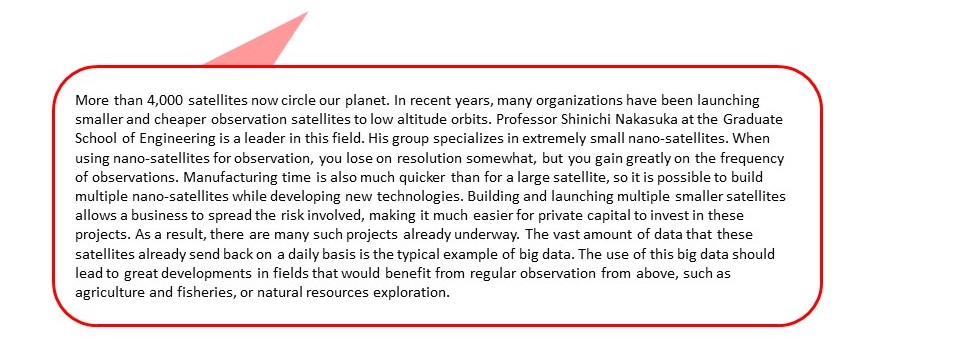
The president of the University of Tokyo mentioned the UTOPS project and faculty members in his address at the 2018 Autumn Semester Diploma Presentation/Commencement Ceremony.
https://www.u-tokyo.ac.jp/ja/about/president/b_message30_07.html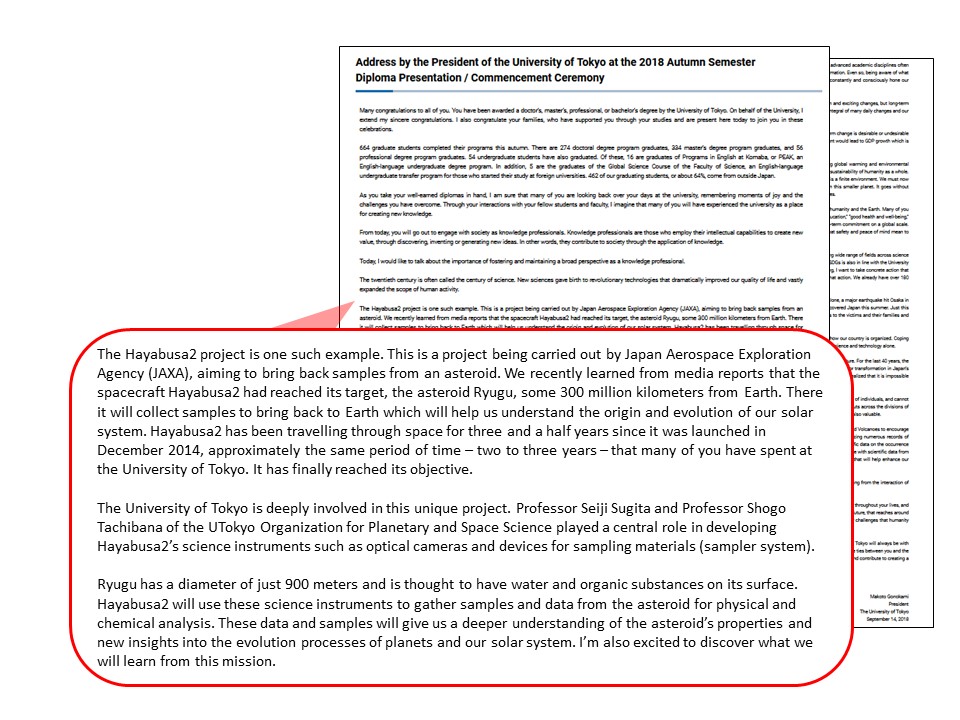
(2018.9.14)
Dr. Ming-Chang Liu, SIMS Lab/Department of Earth, Planetary & Space Sciences, UCLA, visited UTOPS and gave a lecture “The formation environment of the Solar System: A perspective from short-lived radionuclides”.
(2018.6.14)
Press release on paper published in the journal Nature led by Satoshi Kasahara (associate professor):
Pulsating aurora from electron scattering by chorus waves ( http://www.s.u-tokyo.ac.jp/en/info/5769/ )