Professor Shogo Tachibana of the UTOPS gave a public lecture at the Keck Institute for Space Studies (KISS), California Institute of Technology, on February 25.
In his lecture, titled “Sample Return Missions from Small Bodies — Hayabusa, Hayabusa2, and Beyond,” he introduced JAXA’s sample return missions and recent research on materials returned from small bodies in the Solar System.
After the lecture, he also met with students and early-career researchers and discussed ongoing research in planetary science.
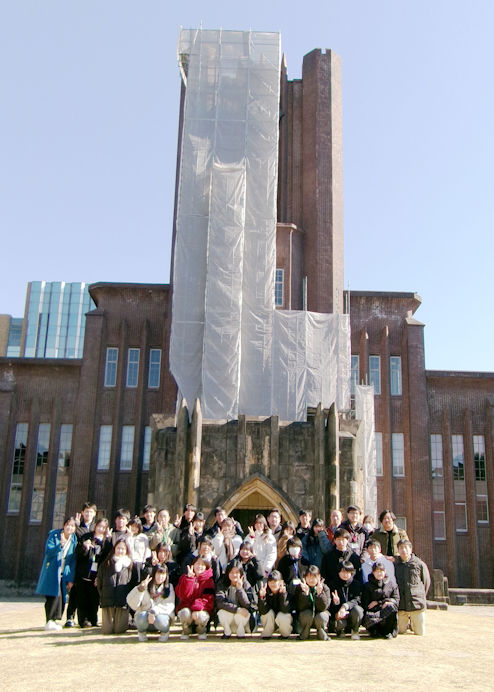
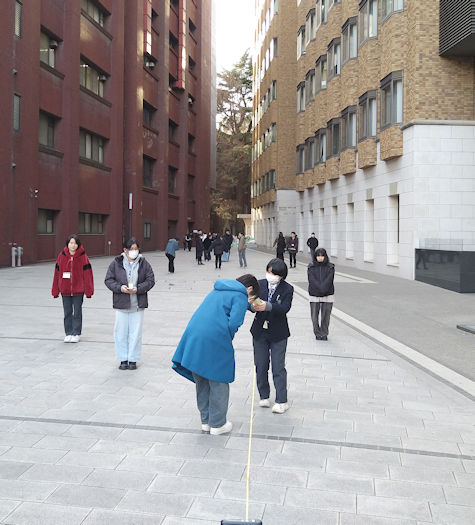
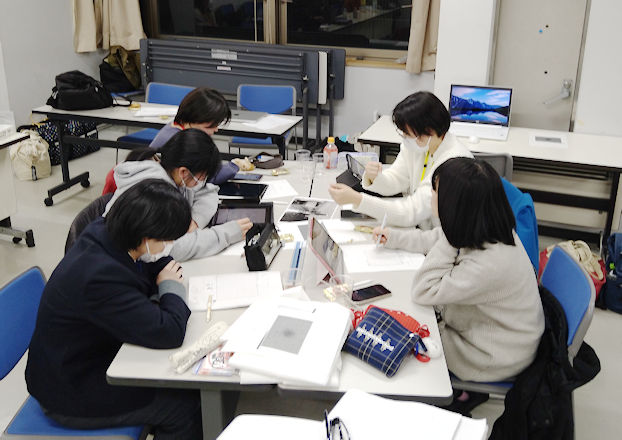
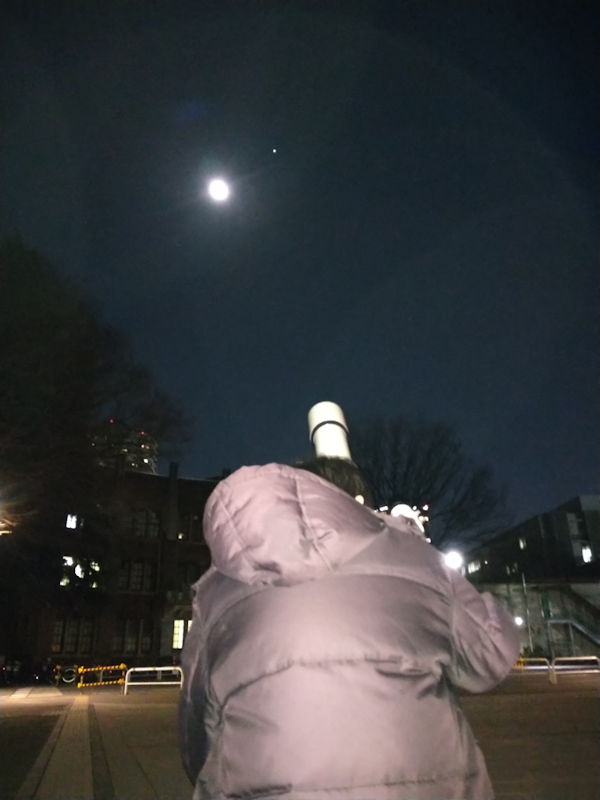
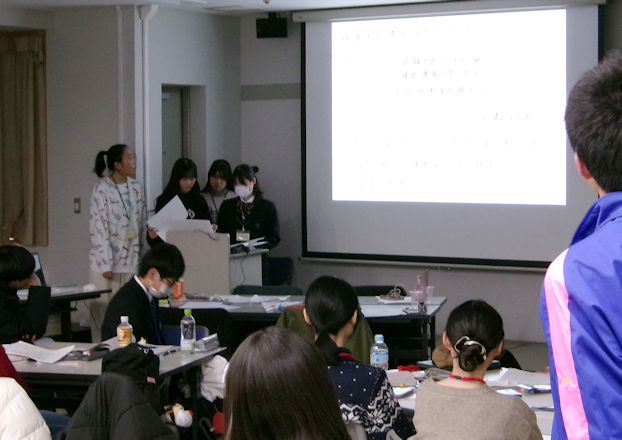
On February 21 (Sat.) and 22 (Sun.), 2026, we held an astronomy training for students from Ena High School in Gifu Prefecture. They estimated the distance to galaxies from photographs of galaxies and used the recession speeds of these galaxies to determine the age of the universe.
02/22/2026Held an Astronomy Workshop for High School Students はコメントを受け付けていませんNews, UTOPS-News Like
Professor Shogo Tachibana of the University of Tokyo Organization for Planetary and Space Science (UTOPS)visited the Senior High School at Otsuka, University of Tsukuba, and gave special lectures to students studying Earth science.
During the sessions, he spoke about space science and the Hayabusa2 mission, and introduced research on samples returned from asteroid Ryugu. He also joined a career café session, where students interested in space science had the opportunity to discuss related topics and ask questions.
02/21/2026Special Lecture at Senior High School at Otsuka, University of Tsukuba: “The Voices of the Stones Returned from Asteroid Ryugu by Hayabusa2” はコメントを受け付けていませんNews, UTOPS-News Like
A research project involving members of the Department of Earth and Planetary Science, Graduate School of Science, The University of Tokyo, has been selected under the Japan Aerospace Exploration Agency (JAXA) Space Strategy Fund (2nd Phase).
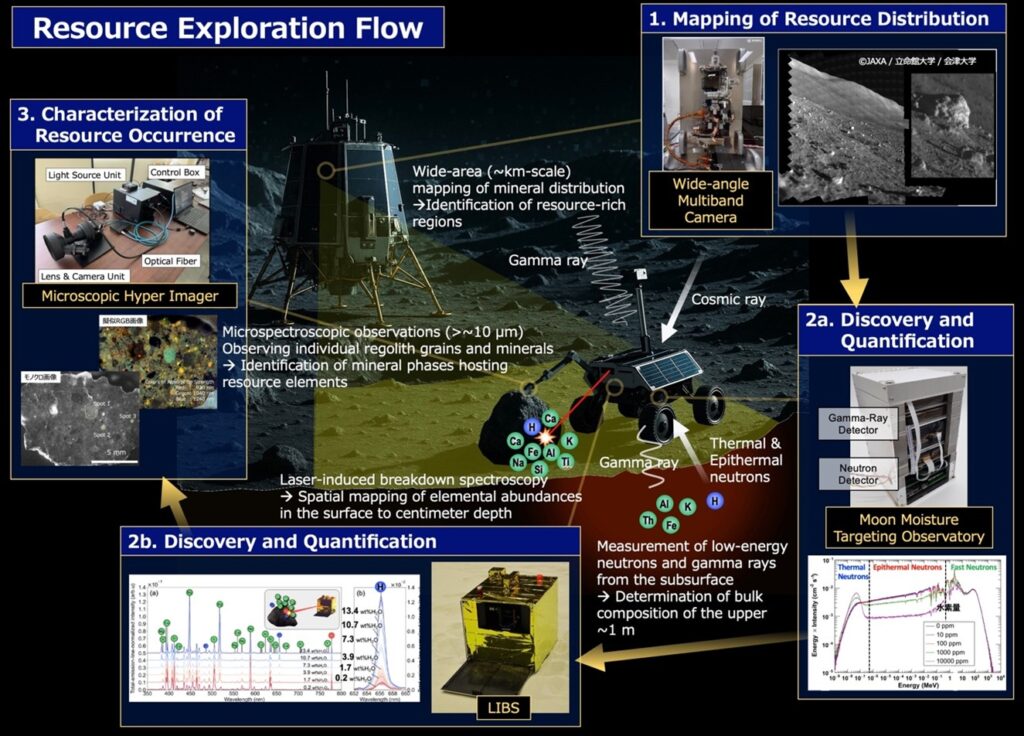
The project, titled “Development of a Flight Model for Water and Metal Element Exploration Equipment and Actual Measurement of Lunar Resource Quantities,” aims to establish technologies for exploring water and metallic elements as potential lunar resources. The project was officially approved on February 10, 2026, marking the launch of the LUNAR-RABBIT Project.
The research team will develop four observation instruments designed to measure the concentration and mineral composition of elements on the lunar surface. These instruments include a wide-angle spectroscopic camera, neutron and gamma-ray sensors, a laser-induced plasma emission spectrometer (LIBS), and a microscopic spectroscopic camera. By combining these technologies, the project aims to identify resource elements, evaluate their abundance, and determine how they are incorporated into lunar minerals.
In addition to resource exploration, the observation system is expected to contribute to the acquisition of lunar environmental data, including geological characteristics and radiation conditions relevant to future lunar exploration and infrastructure development.
Researchers from UTOPS are participating in the project as part of a broad industry–academia collaboration involving universities, research institutes, and private companies.
https://www.s.u-tokyo.ac.jp/en/info/11065/
02/12/2026Project on Lunar Resource Exploration Selected for JAXA Space Strategy Fund はコメントを受け付けていませんNews, UTOPS-News Like
On January 31 (Sat.) and February 1 (Sun.), 2026, we held an astronomy training for students from Matsusho-Gakuen High School and Suwa-Seiryo High School in Nagano Prefecture and Nirasaki High School in Yamanashi Prefecture. They estimated the distance to galaxies from photographs of galaxies and used the recession speeds of these galaxies to determine the age of the universe.
02/03/2026Held an Astronomy Workshop for High School Students はコメントを受け付けていませんNews, UTOPS-News Like